
If you own a rental property anywhere in Greater Grand Rapids, you know the January ritual. A polar vortex drops over Lake Michigan, your phone buzzes at 2:14 AM, and an emergency HVAC tech charges you $300 just to park his van on Fulton Street before handing you a $1,800 quote for an emergency heat exchanger swap. It is easy to treat maintenance and capital expenditures as an unpredictable act of God—a quiet margin drain accepted as the cost of ownership.
Roof leaks are patched once drywall turns brown, furnaces are replaced once they suddenly break down in sub-zero weather, and turnover projects are completed by whichever contractor happens to pick up the phone on a Friday afternoon. This firefighting mindset slowly destroys cash flow.
As a case in point, our team recently conducted an in-depth review of a new client’s property as part of our onboarding process. The rental, a historic 3-unit built in the early 1900s, is situated in the heart of Midtown. We quickly found that the furnace filters hadn’t been touched in 18 months, water was pooling around the fieldstone foundation, and unit turns were averaging over 50 days.
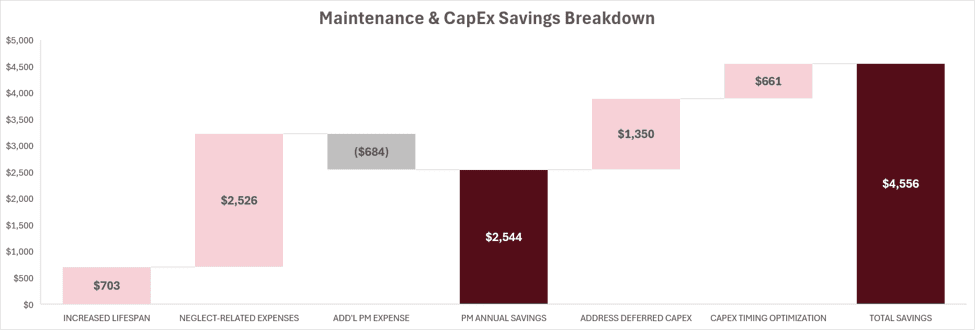
By replacing reactive triage with an aggressive asset-preservation protocol, we unlocked thousands in improved NOI on a singlet asset. Here is how real property stewardship works in West Michigan when you run your portfolio on operational data rather than guesswork:
The True Cost of “Band-Aid” Repairs in West Michigan.
Managing rentals in Eastown, Heritage Hill, or the West Side isn’t like managing real estate in the Sunbelt. West Michigan’s freeze-thaw cycles aggressively hunt down every microscopic weakness in your building envelope. When you push building systems to mechanical failure, your capital losses compound exponentially.
- The Freeze-Thaw Penalty: A $200 exterior caulking and tuckpointing job missed during an October walkthrough becomes a $4,500 plaster, framing, and mold remediation bill. Water sneaks behind soft historic brick, freezes, expands, and blows out interior lath and plaster walls over two winters.
- Truncated Mechanical Lifespans: Gas furnaces and central A/C units in Grand Rapids should baseline last 15 to 20 years. Skip annual heat exchanger flushes, coil cleanings, and bi-monthly filter swaps, and that equipment dies around year 10 or 11—pulling forward massive capital replacements by nearly a decade.
- Peak Storm Surcharges: After-hours dispatch rates during a Grand Rapids blizzard carry 50% to 100% labor markups. You aren’t just paying for the repair; you’re paying a steep premium for bad timing and poor planning.
Case Study: Financial Improvement of 3-Unit Midtown Rental
To see how operational discipline hits the bottom line, look at the actual performance figures from our audit. Implementing robust preventative maintenance programs, optimizing the timing of component replacements, and reducing the need for emergency repairs adds over $4,500 a year to the owner’s distribution checks without requiring large outlays towards renovations or building improvements.

The 4 High-Impact PM Focus Areas for West Michigan
Instead of broad advice, we suggest that maintenance capital be allocated to specific mechanical and structural focal points that drive 80% of budget variance in Grand Rapids:
- Heating & Mechanical Integrity: Every May and October, maintenance techs should clear condensate drain lines, clean flame sensors, test sump pump check valves, flush tankless water heaters, and run heat exchanger integrity tests before the first freeze. Catching a cracked heat exchanger in mild October weather lets us source wholesale replacement units on our schedule—not during a sub-zero emergency in January.
- Building Envelope & Historic Foundations: Annual roof, gutter, and foundation audits are mandatory. It is essential to clear fascia gutters and re-verify downspout kickouts. Retuckpointing crumbling mortar joints on historic limestone, fieldstone, and brick foundations prevents hydro-static pressure from leaking into basements and ruining mechanicals.
- Water Loss Control & Utility Audits: Plumbing leaks represent silent capital erosion. During every turnover, checking lines on toilets and laundry, replacing aged flappers, and installing anti-tamper low-flow aerators can drive large saving for property owners. This simple protocol eliminates sudden line bursts and trims owner-paid municipal water bills in Grand Rapids.
- Turnover Velocity: Owners can lose immense sums during tenant transitions. Advanced coordination, streamlined turn maintenance processes, and early marketing can help fill vacancies with high-quality, long-term tenants while other properties sit vacant for weeks.
Modeling Projected CapEx
CapEx should never be a sudden crisis that wipes out a full year of cash distributions. We audit every major asset component against its Remaining Useful Life to build predictable, smoothed capital reserve targets. By mapping capital outlays years in advance, aggregating spend across a portfolio optimizes maintenance and CapEx through reduction in emergency repairs, improved pricing, increased asset lifespans, and deferred replacement related spend.

The Path Forward for Grand Rapids Landlords
Every dollar saved on emergency dispatch fees, extended vacancy, and premature mechanical failure is a dollar added straight to owner distributions. The difference between a struggling rental asset and a high-performing one rarely comes down to gross rent—it comes down to operational discipline and strong planning. When you eliminate guesswork and run your properties with proactive stewardship, your portfolio stops bleeding cash and starts delivering the reliable equity growth and income it was bought to generate.